Why Power Surges Increase During the Holiday Season?
Many families across Clearwater celebrate the holidays by decorating their yards and home’s exterior with inflatable displays and festive lights. These decorations not only make a home look absolutely cheerful and inviting,
but they also increase the demand on the local power grid. You might even find yourself going without electricity during power outages caused by the heavy electrical load. If you understand why these power surges normally occur, it becomes much easier to avoid them.
Plugging In too Many Lights and Decorations
Your home’s electrical system can only handle so many decorations and lights connected to it at the same time. Once you plug in one too many devices, the system will use its built-in breaker to shut itself down. It does this to protect itself from overheating and electrical fires. With this in mind, you must be careful and strategic when decorating your home for the holidays.
The smartest way to do this is to total up the wattage of all connected devices and compare it to the circuit’s capacity. You may need to have one of our electricians upgrade your panel with dedicated circuits so it has enough power to handle the demand without tripping the breaker.
Neighborhood-Wide Electricity Use Spikes
When multiple households in the same area plug in a bunch of decorations and holiday lights at the same time, it puts extra strain on the neighborhood power grid (even if each home’s electrical panel can handle the individual load). This can lead to voltage drops that cause lights to flicker or dim intermittently. It can also lead to the neighborhood’s transformer completely failing, especially if it overheats.
If you think this might be a problem for your neighborhood, you may want to discuss setting a schedule for when everyone turns on their lights so they’re on at different times. This way, the transformer can evenly distribute the electrical load without risking burnout or outages.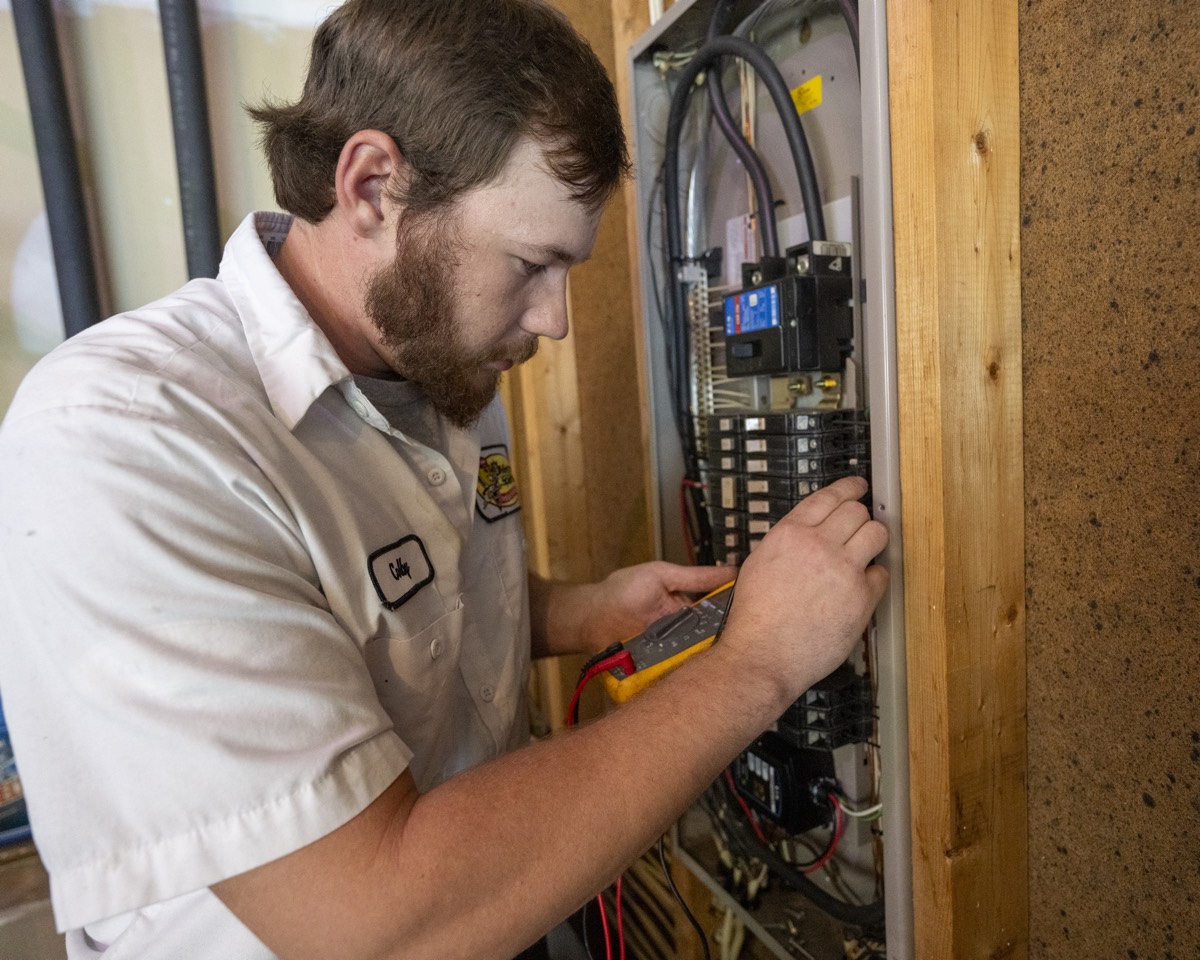
Poor Use of Extension Cords
Extension cords are extremely handy during the holidays. They give you the ability to customize your decorations by setting up lights and displays far away from power outlets. But when using these cords, you must be extra careful. There is a right way and a wrong way to connect multiple decorations and devices. When used the wrong way, the cords can overheat. If the wiring inside was to melt, it can even cause a power outage.
Here are the main things to avoid when using extension cords:
- Daisy-chaining cords
- Overloading outlets
- Using indoor cords
- Running under rugs
- Exposing to moisture
- Ignoring signs of damage
The proper way to use extension cords is to avoid overloading them and to always use cords rated for outdoor weather. Instead of running them under rugs or doors, run them along exterior walls or edges and secure them with plastic cable clips. This will prevent tripping hazards from loose cords. It also helps to use shorter cords because you get the benefit of stronger, more stable power flow.
Harsh Winter Weather
Clearwater isn’t known for extreme winter weather, but this doesn’t mean cold snaps don’t roll through every now and again. When the temperature outside suddenly drops, most homes turn off the AC so they can use their heaters or furnaces. This sudden use of electricity from all the homes in the neighborhood increases the load on the local power grid, sometimes creating power surges and short outages. Clearwater also experiences strong winds from time to time, further adding to power disruptions when fallen branches take down power lines.
Your Power Company Switches Loads
Power outages are also common during holiday seasons because power companies sometimes redistribute electricity across certain areas to balance the demand. During the load switch, there can be short bursts of extra current that make their way through your home’s electrical system. These power surges, although brief, can be strong enough to knock certain devices offline. Even though the surge isn’t damaging, it can still lead to wear on devices’ internal parts, causing issues with performance and reliability.
Outdated Panels Finally Give Out
If you connect additional circuits to an older panel that doesn’t have enough amperage, you may push it beyond its limit and trip the breakers or cause an overload. You won’t be able to safely expand your electrical system unless you get a new panel.
Signs of an outdated electrical panel:
- Flickering or dimming lights
- Insufficient circuit capacity
- Burning smell near panel
- Aluminum wiring present
- Warm or hot breakers
- Panel older than 25 years
- Loose or shaky breakers
Outdoor Moisture Seeps Into Outlets and Wiring
The humidity and rain in Clearwater can be major hindrances to outdoor outlets and wiring. When moisture seeps into these connections, it creates a conductive path for electricity. And when the circuit shorts out, it can cause power outages because of the sudden surge. This problem is especially common when using decorations that aren’t rated for wet conditions.
To prevent moisture problems in outdoor outlets and wiring, it’s smart to use waterproof covers and cords. Anytime you notice a buzzing noise or burning smell, disconnect the outlet immediately. An electrician will need to look at the wiring to see whether there’s been a short or corrosion. If you keep using the outlet, you significantly raise the risk of a power outage.
Can a Whole-Home Surge Protector Help?
Yes, a whole-home surge protector is one of the best investments you can make to protect your electrical system. When holiday power surges occur, you’ll have a safeguard connected straight to your main electrical panel. The protection it provides keeps the excess voltage from reaching your appliances, so you don’t have to worry about damage or costly replacements. Don’t put up with any malarky; call Mister Sparky!